Landscape photography on a road trip comes with a constraint that most photography guides don't account for: limited time at each stop. A scenic pull-off might get ten minutes before the rest of the group is ready to move on, which changes how useful advanced techniques actually are in practice compared to a dedicated photography trip with no time pressure at all.
This is a starting point for getting solid results quickly, not a complete photography course — the kind of basics that make the most difference when time at each stop is short. None of what follows requires manual camera settings or technical photography knowledge beyond what a basic point-and-shoot or phone camera already offers.
Composition Matters More Than Camera Settings
A well-composed photo on a basic camera usually beats a poorly composed one on expensive gear, which is good news for anyone road-tripping with whatever camera they already own. Placing the horizon off-center, rather than splitting the frame in half, is a simple adjustment that improves most landscape shots immediately.
Including something in the foreground — a rock, a patch of wildflowers, a fallen log — gives the eye a place to start before moving into the distance, which adds depth that a shot of only distant mountains often lacks. This single habit, more than any camera setting, tends to separate a flat snapshot from a photo that actually holds attention long enough to be worth sharing afterward.
Shoot in Short Bursts at Each Stop, Not One Frame
With limited time at a pull-off, taking several quick variations — different angles, different foreground elements, horizontal and vertical orientations — produces better odds of a strong shot than carefully composing a single frame and moving on. Sorting through options later is easier than wishing for a second chance at a stop the trip won't return to, especially on a route where backtracking adds real time rather than just a short walk back.
This approach also forgives mistakes; if one frame is poorly exposed or slightly blurred, there are others to fall back on rather than a single irreplaceable shot from a stop that's already behind you.
Use the Car as a Scouting Tool
Slowing down (safely, with hazards on if needed) while approaching a scenic stretch, rather than driving at full speed until an official pull-off appears, often reveals better compositions than the designated viewpoint offers. Some of the best shots on a mountain road trip come from unofficial stops that aren't marked on any map or mentioned in any guidebook.
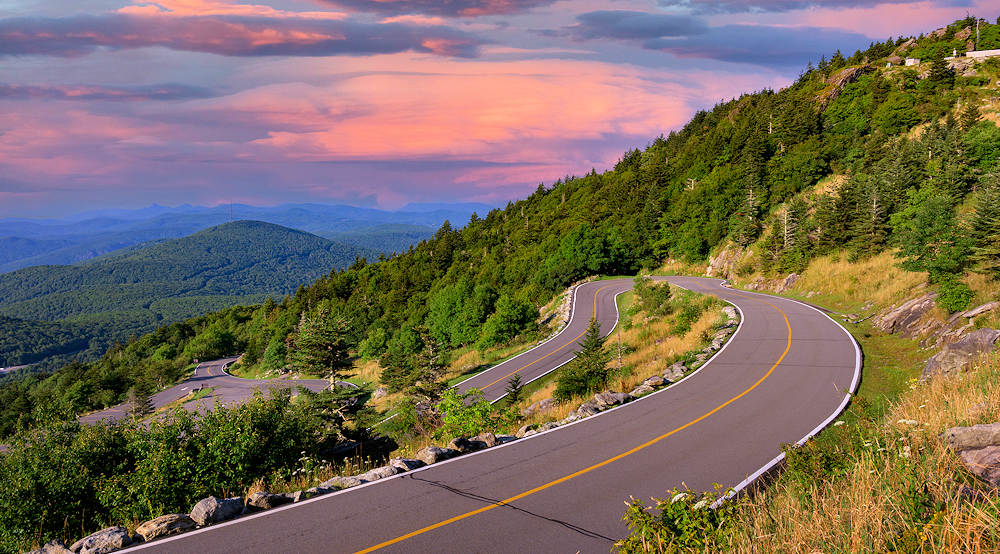
Safety still comes first — only stopping where it's actually safe to pull over, not on a blind curve or narrow shoulder, regardless of how good the view looks from the driver's seat.
Don't Chase Every Famous Viewpoint
Trying to photograph every well-known spot on a route often means arriving at each one in the middle of the day, when light is at its least flattering, just to fit them all in. Picking two or three priority locations to visit at the right time of day, and treating the rest as bonus stops, usually produces a stronger overall set of photos.
This also reduces the stress of a packed itinerary, leaving room to stop at something unplanned and interesting along the way without feeling like the schedule is already falling behind. A broader archive of stops from past trips is a reasonable way to find a few less-obvious priorities instead of defaulting to the same handful of famous names everyone already plans around.
Two Very Different Stops, Same Basic Approach
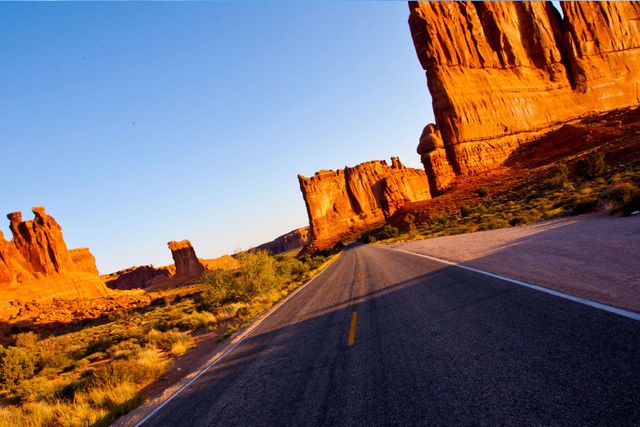
The specifics change from location to location, but the fundamentals hold steady. A walk through Arches National Park calls for a completely different foreground than a mountain lake does — sandstone and sky instead of water and peaks — yet the same instinct to find a strong foreground element before framing the shot applies equally well. A different angle from the same park makes the point further: small changes in position produce very different compositions from the same general spot.
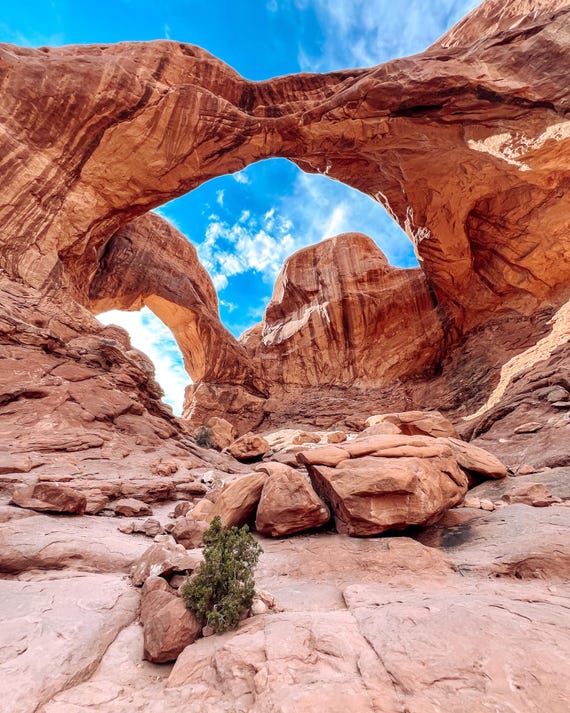
Treating these fundamentals as transferable, rather than specific to one kind of landscape, makes it easier to get solid results at a stop you've never researched in advance.
Reviewing Shots at the End of the Day, Not at Each Stop
Checking every photo on a small camera screen immediately after taking it eats into time that could go toward the next composition, and the small screen makes it hard to judge sharpness or exposure accurately anyway. A quick glance to confirm nothing was badly misfired is enough in the moment, with a proper review happening later on a laptop or larger screen.
This habit also keeps the pace of a road trip moving, since stopping to scrutinize every frame in detail at each pull-off adds up to real lost time across a multi-stop day.
A Simple Pre-Stop Checklist
- Check the light direction before choosing where to stand
- Find a foreground element before framing the shot
- Shoot a few quick variations, not just one frame
- Try both horizontal and vertical orientations
- Only pull over where it's actually safe to do so
Frequently Asked Questions
Do I need a professional camera to get good road trip landscape photos?
No — composition and timing matter more than equipment for most landscape shots, especially at a beginner level.
How much time should I plan for each photo stop?
Ten to fifteen minutes is usually enough for a few solid compositions, though a truly exceptional spot can justify longer.
Should I prioritize famous viewpoints or unplanned stops?
A mix works best — a couple of priority famous spots timed for good light, with room left for interesting unplanned stops along the way.
What's the most common beginner mistake in landscape photography?
Centering the horizon and leaving out a foreground element, both of which flatten a photo that could otherwise have more depth.