Alpine lakes look dramatically different depending on when you arrive, and the difference isn't just about light — wind patterns, crowd levels, and water clarity all shift through the day in ways that matter for photography. Showing up at noon because it fits the schedule usually means missing the conditions that make these lakes photograph so well in the first place, often without realizing what was lost until comparing notes with someone who visited at a different hour.
Understanding what changes, and when, makes it possible to plan around the right window instead of hoping for good luck. The same lake visited at three different hours can produce three genuinely different photographs, which is worth keeping in mind when a trip only allows for a single visit rather than several return trips.
Early Morning Is Usually the Calmest Water
Wind tends to pick up through the morning as the day warms, which means the stillest water — and the clearest mirror-like reflections — usually happens in the first hour or two after sunrise. A lake that looks choppy and unremarkable by midday can be glass-still at 6am, which is why the same destination can produce wildly different reviews depending entirely on when someone happened to visit.
This window also tends to have the fewest other visitors at well-known lakes, which matters both for a cleaner shot and for a quieter experience at a popular spot. Getting there before sunrise, rather than at sunrise itself, leaves a buffer for setting up a tripod and composing a shot calmly instead of rushing as the light starts changing rapidly around you. Arriving even twenty minutes early often makes the difference between a relaxed setup and a frantic scramble to catch the best few minutes of color.
Midday Light Flattens Color More Than People Expect
The harsh, direct light of midday reduces the color contrast that makes turquoise alpine lakes look so vivid in photos — the same water that glows at 7am can look washed out and gray-blue by noon, a difference stark enough that photos from the same spot taken hours apart can look like entirely different locations. This is one of the more counterintuitive parts of alpine lake photography for anyone used to thinking of midday as simply "good light."
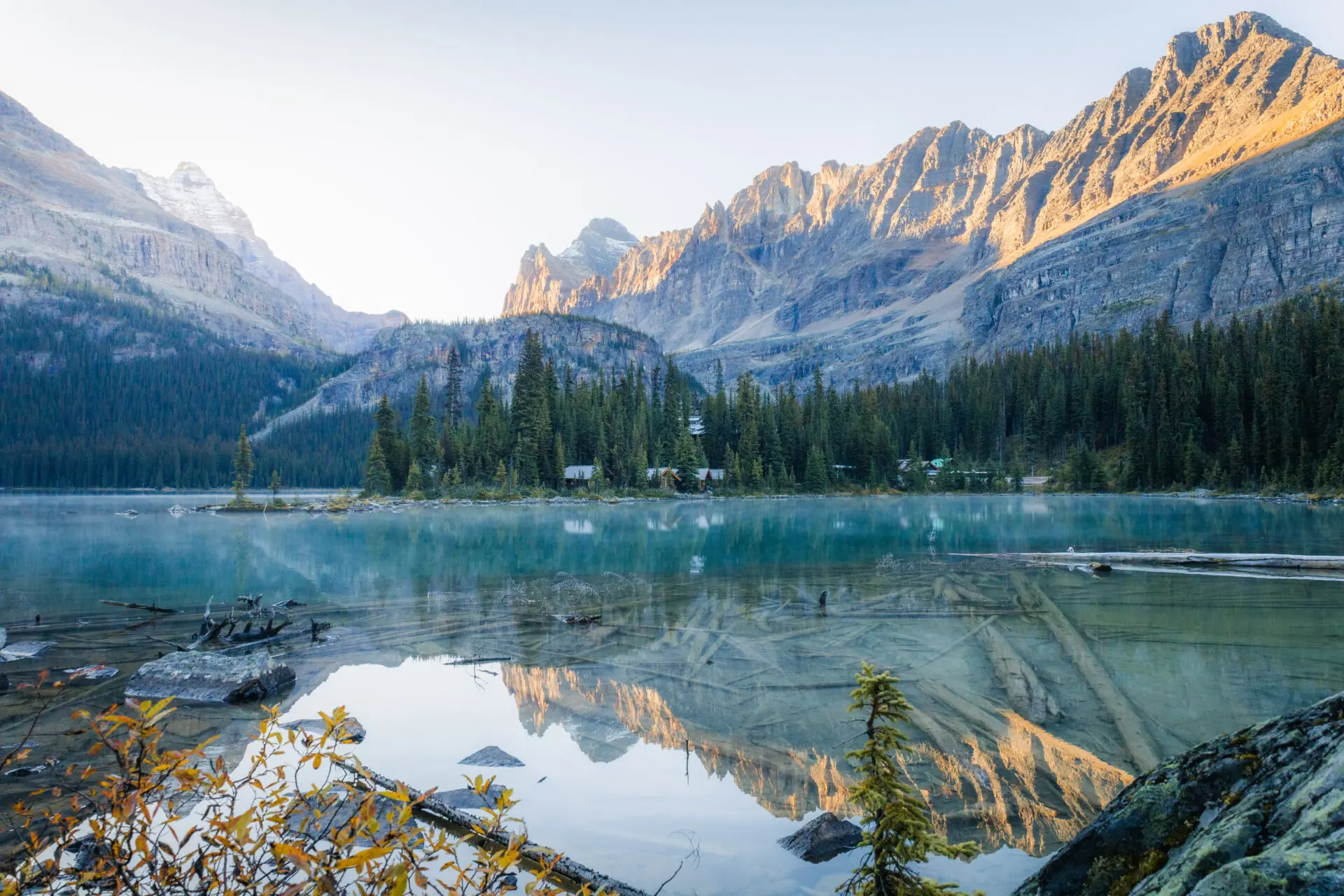
If midday is the only available window on a given day, a polarizing filter helps recover some of that lost color contrast, though it won't fully match the early-morning effect — a reasonable compromise rather than a true substitute for good timing, especially on a schedule that doesn't allow for a second visit.
Late Afternoon Brings a Different Kind of Light
As the sun moves lower in the afternoon, long shadows from surrounding peaks often fall across parts of the lake, creating a mix of lit and shadowed water that can be striking in its own way, different from the uniform glow of early morning. This window rewards experimenting rather than expecting the same result as sunrise.
Wind is often still present at this time, so it's a better window for shots that use the shadow patterns than for mirror reflections specifically, which tend to favor the stiller conditions found earlier in the day instead.
Weather Can Override the Clock Entirely
An overcast morning produces flat, even light that can actually suit close-up or detail shots better than the high-contrast light of a clear sunrise, even though it lacks the dramatic color. Treating weather as a variable to work with, rather than a reason to skip a visit, opens up more usable time than waiting for a textbook-perfect morning that may never actually arrive during a short trip.
Fog, common at higher elevations in early morning, can also create its own atmospheric effect worth photographing, even if it initially looks like bad luck for visibility rather than an opportunity in its own right. Browsing a wider range of conditions across different visits makes this easier to accept — plenty of memorable shots come from mornings that didn't start out looking promising.
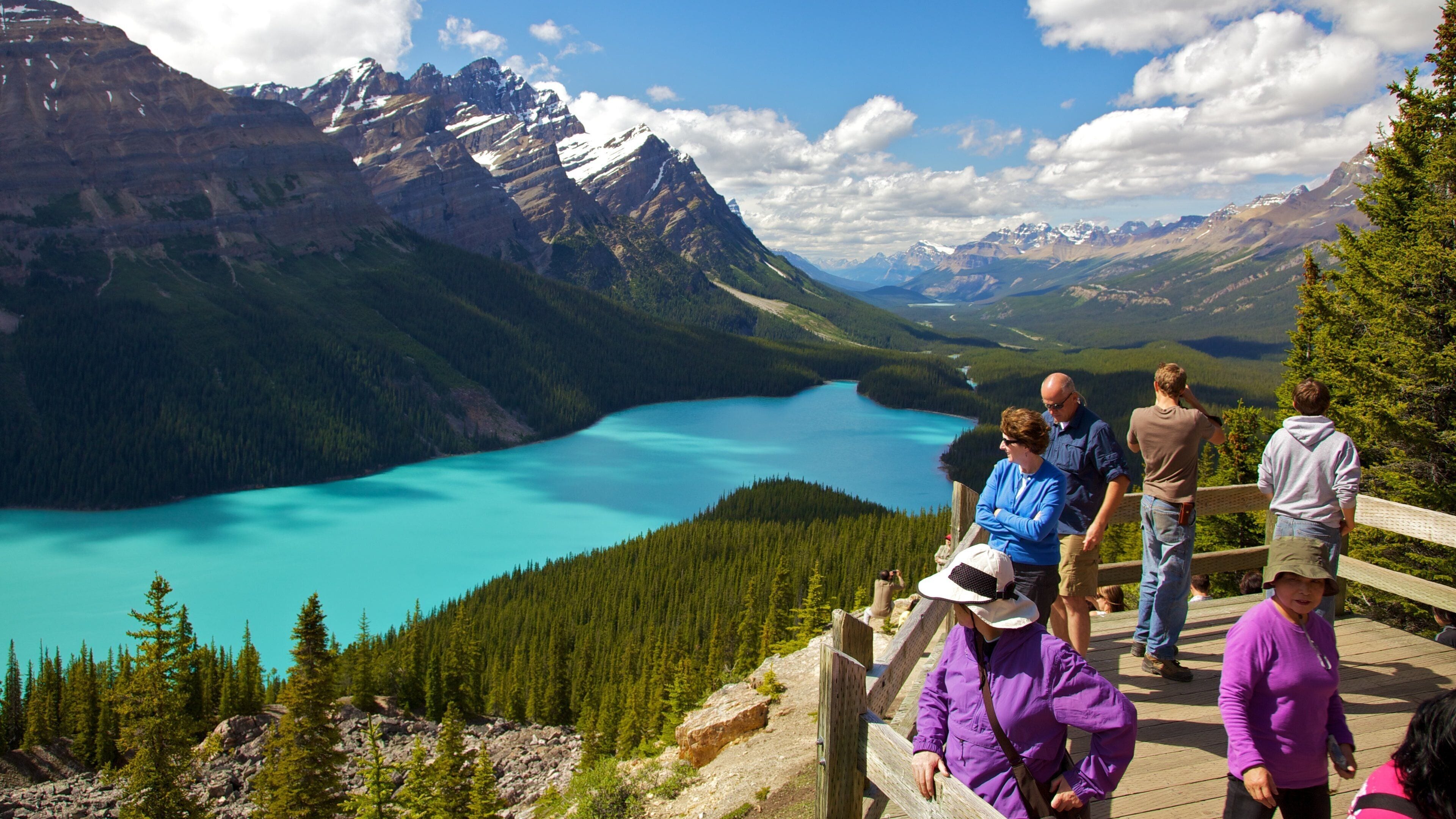
Learning From a Lake That Changes Hour to Hour
This view of Peyto Lake from Bow Summit illustrates the point well — the same vantage point produces a dramatically different photograph depending on when you're standing there, from the deep turquoise of early morning to the flatter tones of a midday visit. Revisiting a single known spot across a few different windows teaches more about timing than reading about it in the abstract.
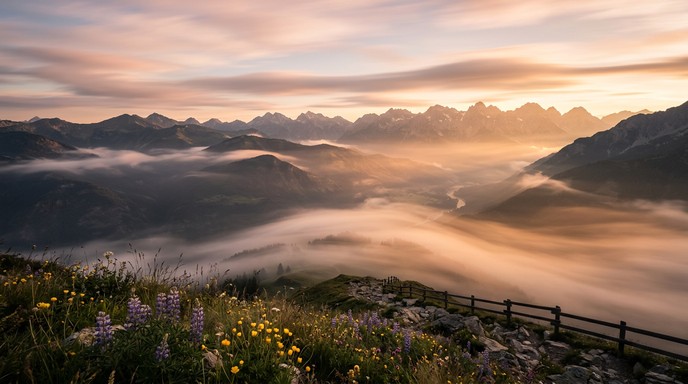
For a lower-elevation comparison, this view over a mountain valley shows how the same timing principles apply even when the water itself isn't the main subject of the frame.
A Quick Reference for Picking a Window
- First hour after sunrise: calmest water, strongest color, fewest crowds
- Mid-morning to early afternoon: flatter color, often the only option on a tight schedule
- Late afternoon: directional shadows, different mood than sunrise
- Overcast: good for detail and close-up shots, weak for dramatic color
Frequently Asked Questions
What time should I arrive at an alpine lake for the best reflection shot?
Within the first one to two hours after sunrise generally gives the calmest water and clearest reflections, before wind typically picks up.
Is midday ever a good time to photograph an alpine lake?
It's the least favorable window for color and reflections, though a polarizing filter can help recover some of what's lost.
Does cloudy weather ruin alpine lake photography?
Not necessarily — overcast light suits detail and close-up shots well, even if it lacks the dramatic color of a clear sunrise.
Why does wind matter so much for this kind of photography?
Even light wind breaks up the water's surface enough to disrupt reflections, which is why calm early-morning conditions are so valued.